

Terpenes are found in the trichomes of female cannabis plants. Trichomes are resin glands that cover the surface of the buds, leaves and stems that produce the terpenes. Some of the terpenes found seem to aid in the plant’s survival. Some may attract or repel certain insects. They seem to support the plant’s immune defenses. The grow conditions such as temperature and humidity can affect the quality of the terpenes. Research into the effects of terpenes is a fairly new development.
Understanding the Endocannabinoid System (ECS)
The endocannabinoid system is a cell signaling system found in the human body in the 1990’s. The ECS plays a critical role in maintaining homeostasis
(the internal balance of bodily functions such as mood, sleep, appetite, pain regulation, immune response and memory).
There are 3 components to the ECS sytem:
1. Endocannabinoids and Phytocannabinoids
2. CB Receptors
3. Enzymes
Endocannabinoids
Endocannabinoids are cannabinoids that are naturally produced by the human body.
Two of the most widely studied endocannabinoids are:
Anandamide (AEA)
Anandamide, also known as AEA, helps with:
- Mood
- Motivation
- Pain Regulation
2-Arachidonoylglycerol (2-AG)
- 2-Arachidonoylglycerol, or 2-AG, has higher levels found in the brain. It helps with:
- Possible cardiovascular health
- Immune function
Phytocannabinoids
Phytocannabinoids are cannabinoids naturally produced by the cannabis plant.
Common phytocannabinoids include:
THC
CBD
CBN
2. Cannabinoid Receptors
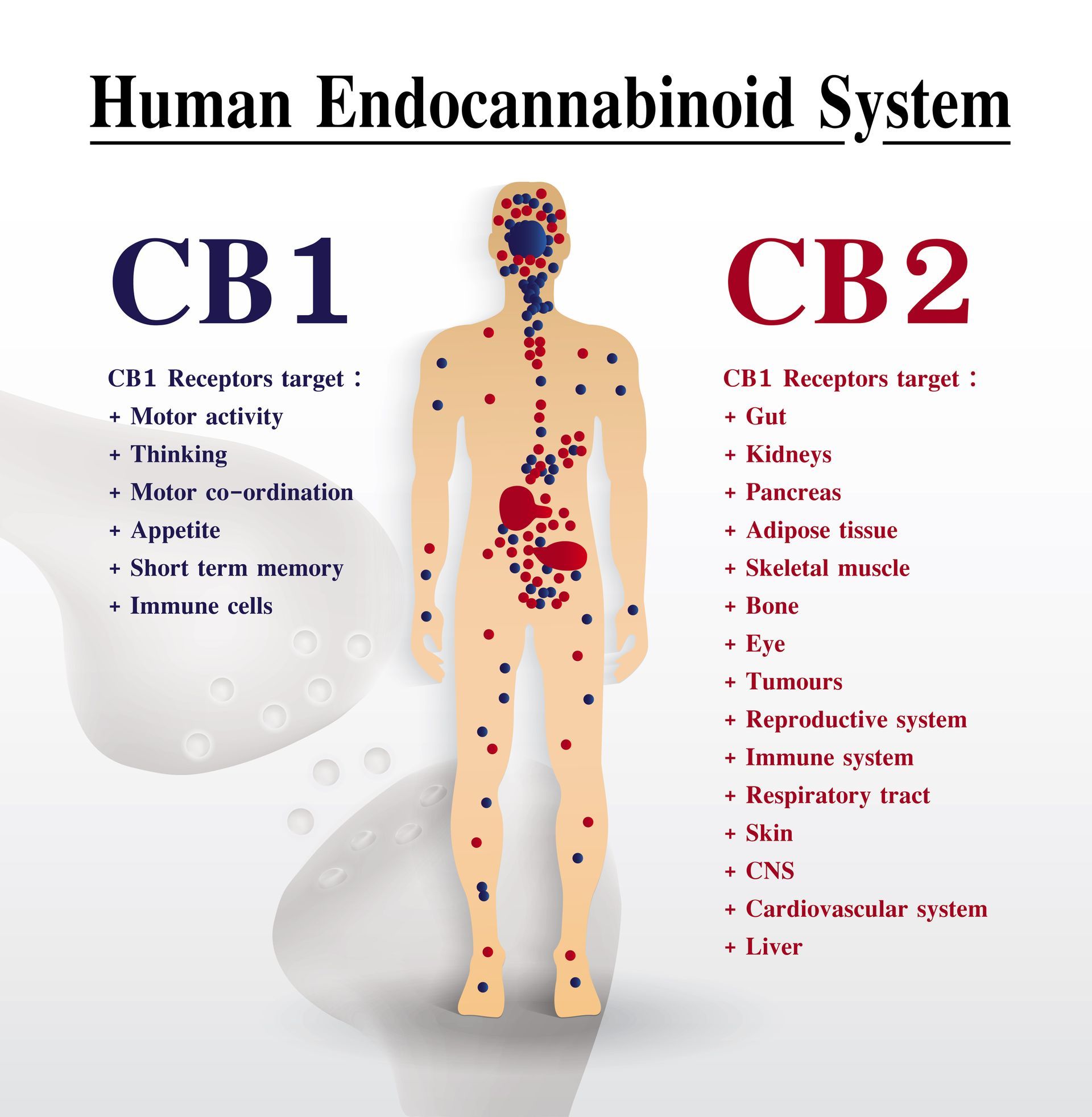
Cannabinoid receptors are located throughout the body. The two primary cannabinoid receptors are known as CB1 and CB2 receptors.
CB1 Receptors are found in the central nervous system (brain and spinal cord).
- These are associated with memory processing and pain & mood regulation
CB2 Receptors are usually found in the peripheral nervous system and the immune system
- Has a role in management of inflammation and tissue repair
3. Enzymes
Enzymes break down the endo/phyto cannabinoids when tehy have performed their purpose. There are 2 of them naturally in the human body:
1- Fatty Acid Amide Hydrolase (FAAH)
Fatty Acid Amide Hydrolase (FAAH) breaks down anandamide.
2-Monoglycerol Lipase
Monoglycerol lipase breaks down the 2-AG
What Roles do THC, CBD, and CBN Play?
Different cannabinoids interact with the endocannabinoid system in different ways.
CBD binds directly to both CB1 and CB2 receptors. It prevents the breakdown of anandamide which allows the effects of the endo/phyto cannabinoids to last longer
THC binds to CB1 receptors.
CBN has a weak affinity for both CB1 and CB2 receptors. Mild relaxing body effects.
Learn More About Your Treatment Options
Choosing a medical marijuana physician is an important decision. We're committed to providing compassionate care, trusted guidance, and personalized support every step of the way.
We've helped patients throughout Pinellas County navigate Florida's medical marijuana program since 2017 with personalized, physician-led care. Call (727) 300-0933 today to schedule your consultation and discuss your treatment options.